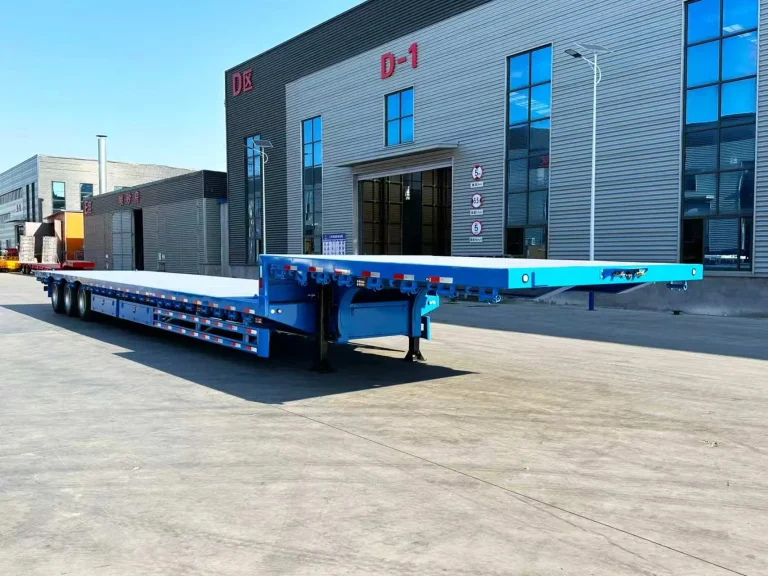
A trailer that cannot match your cargo, road conditions, or legal load limits quickly becomes an operating problem. Poor axle selection, weak decks, and limited loading access increase downtime and cost. A well-engineered مقطورة مسطحة solves these issues with an open platform built around the real transport job.
المقطورات المسطحة for sale are open-deck semi-trailers designed to haul containers, steel, timber, construction materials, machinery, palletized freight, and other large or irregularly shaped cargo. Their open structure allows easy loading from the side, rear, or above, while different lengths, axle layouts, steel or aluminum construction, and load capacities allow fleets to match the trailer to specific transport work.

Why Does the Flatbed Trailer Remain Essential in Heavy-Duty Transport?
The strength of a مقطورة مسطحة is simple: it does not force cargo into an enclosed body. With no fixed roof or sidewalls, operators can approach the deck from several directions. A crane can lift steel from above. A forklift can work from the side. Long products can be positioned without passing through narrow rear doors.
That flexibility explains why flatbeds remain important for construction, infrastructure, steel distribution, port logistics, agriculture, manufacturing, and general freight. تشنلو‘s current flatbed range includes container, three-axle, four-axle, five-axle, heavy-duty, and 60-ton-positioned products for container and bulk-cargo applications.
For fleet owners, the value is not just the open deck. A good trailer can work across several contracts. It may haul a container from a port in the morning, construction materials on the next trip, and packaged industrial freight later in the week. This versatility can make one platform useful across a broad transport operation.

What Cargo Can a Flatbed Trailer Haul?
Flatbeds are used to transport goods that are difficult, inefficient, or impossible to place inside a box body. The deck gives operators freedom when working with long, wide, heavy, or irregularly shaped cargo.
Common applications include steel coils, pipe, profiles, timber, boards, prefabricated products, machinery, palletized freight, building materials, and containers. CHENLU’s current container flatbed page specifically presents 20 ft and 40 ft container transport together with bulk steel and general cargo applications.
| البضائع |
Why a Flatbed Works |
| Standard containers |
Twist locks can secure compatible 20 ft, 40 ft, or other configured container layouts |
| Steel and pipe |
Open sides simplify crane loading |
| Timber |
Long deck supports bundled material |
| Construction materials |
Easy loading and unloading at sites without enclosed docks |
| Machinery |
Open access helps with lifting and positioning |
| Palletized freight |
Forklift access from the side can improve handling speed |
| Irregularly shaped cargo |
No fixed sidewalls restrict the load envelope |
A standard flatbed is not the right tool for every job. Extremely tall machinery may fit a lowbed or stepdeck trailer better. Liquid products need a tanker. Loose sand or coal may require a dump body. The strength of flatbeds comes from being highly adaptable within open-deck freight.

Flatbed Trailer Types Reflect Different Transport Jobs
There is no single design that represents every flatbed. Different flatbed trailer types respond to different cargo weights, deck lengths, axle laws, and loading conditions.
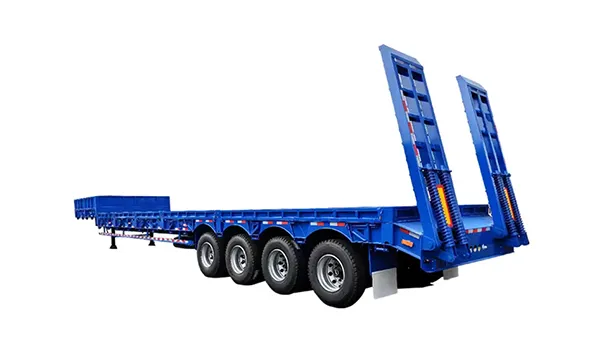
A standard three-axle model is widely used for general cargo. A 40ft flatbed semi trailer may be configured around container and industrial freight operations. Multi-axle models can spread load across more axle positions where the legal framework and chassis design permit. A heavy-duty model may use a more strongly reinforced frame for demanding loading cycles.
Other trailer types include drop-deck or step-deck platforms, extendable units, and aluminum models. Dorsey, for example, currently lists extendable platforms that start at 48 ft or 53 ft when closed and extend for longer loads; that illustrates how specialized flatbeds can move beyond a fixed platform length.
For CHENLU, the current flatbed family includes configurable 20 ft, 40 ft, and 45 ft reference platforms as well as separate three-, four-, and five-axle product pages. Exact axle spacing, rated payload, beam structure, and local legal limits still need to be matched to the final order rather than assumed from the model name alone.
How Do Axle Layout and Load Weight Change Flatbed Performance?
The axle arrangement influences stability, legal load distribution, tire loading, maneuverability, and chassis design. More axles do not automatically mean that a trailer can legally carry any heavier load. The complete vehicle must still meet the axle, gross-weight, road, and registration rules of its destination market.
That matters when operators compare a three-axle trailer with a four- or five-axle platform. The rear axle group, suspension spacing, tire rating, kingpin load, tractor specification, and frame must operate as one system. A trailer designed for heavier loads should therefore be engineered around the duty rather than simply fitted with extra axles.
CHENLU currently publishes a configurable family reference of 20–40 tons for its 20 ft platform and 30–80 tons for its 40 ft and 45 ft platform families. Those figures are configuration ranges, not a promise that every axle and chassis combination can legally operate at every listed load weight.
For international buyers, this distinction is critical. A trailer built for one country’s mining route may need a different axle layout from a unit operating on a European highway or an African cross-border freight route. Engineering should start with the cargo and destination regulations.
Steel, Aluminum Flatbeds, or Combination Construction?
Material choice changes payload efficiency, frame behavior, corrosion exposure, repair practices, and purchase cost.
CHENLU’s published flatbed reference centers on Q345/T700 structural steel for its main beam configurations. Steel is a practical choice for heavy-duty fleets, rough roads, concentrated loading, and markets where welding and structural repairs need to be straightforward.
In other markets, aluminum flatbeds are used to pursue weight savings. Reitnouer focuses on aluminum platform designs and publishes different models for evenly distributed or concentrated loads. MAC Trailer likewise offers all-aluminum platform products for steel plate, pipe, lumber, coils, and building materials.
Combination designs form another category. Fontaine’s Infinity uses steel main beams and cross members with aluminum side rails and flooring, showing how manufacturers can balance structural steel with lighter surrounding components.
| البناء |
Main Operational Focus |
| Steel flatbed |
Strength, repairability, demanding roads, cost control |
| Aluminum flatbed |
Lower tare weight and potential payload efficiency |
| Steel/aluminum combo |
Balance of strength and weight savings |
| Reinforced steel |
Concentrated loads and demanding heavy-haul cycles |
An aluminum floor or an all-aluminum structure can reduce empty weight, but the correct solution always depends on concentrated loading, corrosion conditions, repair support, purchase budget, and expected service cycle.

Why Are 40 ft, 48 ft, and 53-Foot Platforms Common in Flatbed Operations?
Length affects what the trailer can carry, where it can turn, how the load is distributed, and which transport rules apply.
تشنلو‘s export-focused flatbed family currently uses 20 ft, 40 ft, and 45 ft reference platforms, with the 40 ft model shown at approximately 12,400 mm long. Its container application can support one 40 ft or two 20 ft containers depending on the configured lock layout.
North American searches often focus on 48 ft,48′, 53 ft, or 53′ platforms. These market terms should not simply be copied onto an export trailer specification. Local legal dimensions matter. In the United States, FHWA states that the National Network width standard is 102 inches, while vehicle height limits are generally set by states rather than by one federal height limit.
This is why a professional manufacturer should confirm destination-country limits before freezing a drawing. Deck length, overall width, kingpin location, rear overhang, axle spacing, container locks, and turning requirements can all affect whether the final semi-trailer works as intended.
For global projects, the “largest flatbed” is rarely the best question. The better objective is the largest practical deck that can legally and efficiently perform the intended work.
How Do Flatbeds Improve Loading and Unloading?
The open platform is one of the strongest reasons fleets use flatbeds.
A crane can lower a steel bundle directly onto the deck. A forklift can approach from either side. Workers can access tie-down locations without entering an enclosed body. For project cargo, the easy loading advantage can be as valuable as the trailer’s rated capacity.
Tie-down systems may include lashing rings, rope hooks, stake pockets, chains, straps, fixed or sliding winches, and other restraint points. The exact system should match the cargo rather than being treated as an accessory package added after production.
This matters most when a fleet is used to haul several types of freight. Steel coils create different concentrated forces from timber. Pallets behave differently from machines. Long construction products create different restraint needs from a standard container.
A well-designed deck should therefore consider:
- concentrated and distributed load zones;
- deck plate or floor construction;
- cross-member spacing;
- tie-down positions;
- twist-lock locations;
- winch and strap access;
- crane or forklift loading patterns;
- and likely damage points during daily operation.
CHENLU’s current flatbed specifications include platform thickness, main-beam dimensions, twist locks, axle options, tires, rims, landing gear, and suspension as configurable parts of the product family.
Flatbed Trailer Construction Is More Than a Main Beam
Buyers often focus on the main beam because it is easy to compare thickness figures. Yet the complete structure matters.
A flatbed operates through its main rails, cross members, suspension mounts, kingpin area, landing gear supports, rear structure, floor, axle group, welding, and cargo restraint system. A strong beam cannot compensate for weak connections or poor dimensional control.
The current CHENLU 20/40/45 ft reference uses Q345/T700 steel and a 500 mm main-beam height, with different upper, middle, and lower plate thicknesses across platform families. It also offers 13- or 16-ton axle options from CHENLU, FUWA, BPW, or other selected brands.
Suspension choice also affects the operation. Mechanical suspension remains practical for rough roads and heavy work, while air ride systems can be relevant where ride quality, axle management, or highway operating conditions justify them.
This is where factory engineering has more value than simply comparing a specification table. A trailer manufacturer needs to understand where the unit will run, what it will carry, how often it will be loaded, and what parts can be serviced locally.
New Flatbed Trailers and Used Flatbed Trailers Serve Different Fleet Strategies
Searches for flatbed trailers for sale, used flatbed trailers for sale, and new and used flatbed trailers often appear close together, but they represent different business decisions.
A used unit may reduce initial purchase cost. However, the buyer inherits an existing frame history, axle condition, floor wear, previous repairs, corrosion exposure, and unknown loading cycles. A used truck-and-trailer combination can be attractive when availability matters more than customization.
New flatbed trailers, by contrast, allow the fleet to specify the platform around its own operation. A buyer can define axle layout, suspension, deck height, locks, tires, landing gear, toolboxes, spare-tire carriers, lashing points, paint, and branding before production.
Buyers browsing U.S. flatbed inventory may also encounter names such as Fontaine, Reitnouer, MAC Trailer, Dorsey, Wilson Trailer, or listing phrases such as “2024 Wabash.” Those search terms are useful market references, but a global project buyer should compare the engineering behind the product rather than relying on a familiar badge alone. Fontaine, Reitnouer, MAC, and Dorsey each publish different approaches to steel, aluminum, combination structures, axle options, and concentrated load ratings.
For international fleet projects, a new factory-built trailer also creates room for destination-specific OEM / ODM work.
What Makes OEM Flatbed Semi-Trailers Valuable for Global Fleets?
Our work as a semi trailer manufacturer in China starts with the operating task rather than a fixed catalog label.
A three-axle platform for port container work is not automatically the same product as a multi-axle trailer for rough construction roads. Even when both are called a flatbed trailer, their frame reinforcement, axle position, suspension, load restraint, deck thickness, tires, brakes, and maintenance needs may differ.
Typical OEM / ODM variables include:
| المساحة |
Possible Configuration |
| Platform |
20 ft, 40 ft, 45 ft or project-specific dimensions |
| المحاور |
Number, rating, spacing and brand |
| التعليق |
نظام تعليق ميكانيكي أو هوائي |
| الهيكل الرئيسي |
Steel grade and reinforcement |
| الأرضية |
Material and thickness |
| نقل الحاويات |
Twist-lock number and positions |
| Cargo restraint |
Lashing rings, rope hooks, winch systems |
| نظام الدفع |
Tires, rims, brakes, ABS/EBS where required |
| الإكسسوارات |
Toolboxes, spare tire carriers, stakes |
| Exterior |
Paint, color, logo and distributor branding |
This engineering approach is particularly important for fleet owners, port operators, construction contractors, mining companies, distributors, truck dealers, and project buyers who need stable repeat orders rather than one isolated trailer.
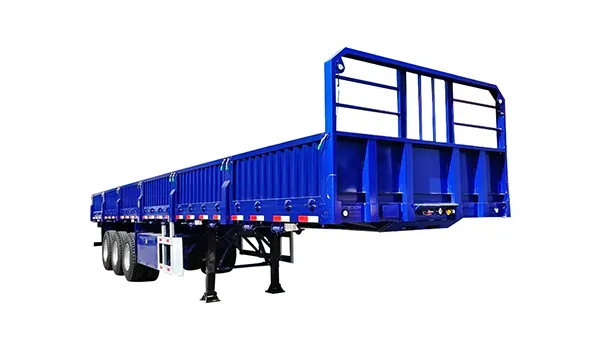
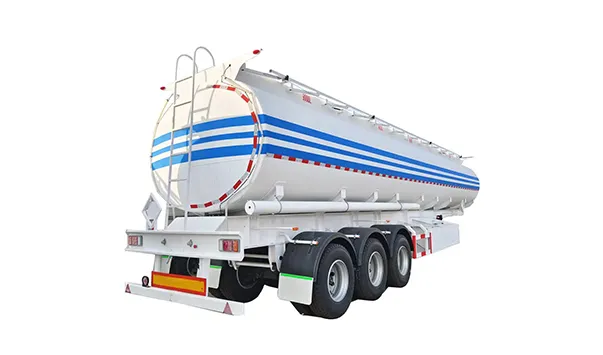
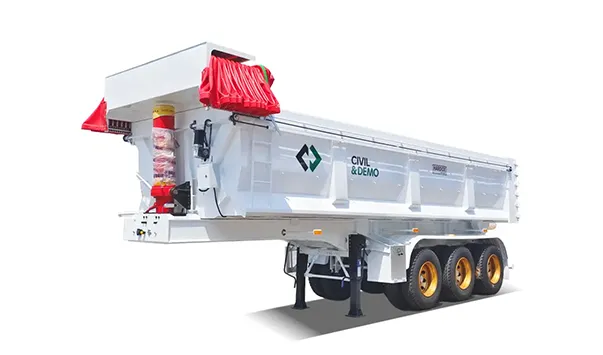
We manufacture more than flatbeds. Our product system also includes skeleton container trailers, sidewall and fence units, side curtain trailers, lowbed and lowboy equipment trailers, removable gooseneck platforms, tanker trailers, bulk cement tankers, dump semi-trailers, car carriers, trucks, and trailer parts. That wider capability helps project buyers coordinate different transport tasks through one manufacturing partner.
Flatbed Trailer Applications Across Construction, Logistics, and Industry
In construction, flatbeds are commonly used for transporting construction products such as steel sections, boards, scaffolding, prefabricated components, pipe, and packaged materials.
In container logistics, a flat platform equipped with the correct twist locks can move standard containers while still remaining available for non-container work. That is an important difference from a skeleton chassis, which is more specialized around container handling.
Industrial fleets may use a platform to haul freight between factories, warehouses, ports, and project sites. Agricultural operations may use it for machinery or packaged products. Infrastructure projects may need it for steel, cable reels, components, or other irregularly shaped cargo.
The same trailer can therefore serve several revenue streams, but only when its load capacities, axle arrangement, frame, and cargo-restraint system match those jobs.
This flexibility is the real reason flatbeds continue to matter. It is not simply an empty deck. It is a configurable transport platform.
الأسئلة الشائعة
What is a flatbed trailer used for?
A flatbed trailer is used to move containers, steel, pipe, timber, construction materials, machinery, pallets, and other freight that benefits from an open deck. Its open sides and top make crane, side, and rear loading possible.
Can a flatbed trailer carry containers?
Yes, when the trailer is designed with the correct container twist locks and structural configuration. CHENLU’s current flatbed family includes 20 ft, 40 ft, and 45 ft reference configurations with different lock layouts. ([陈鲁挂车][2])
ما الفرق بين المقطورة المسطحة ومقطورة الحاويات الهيكلية؟
A flatbed has a complete deck, allowing it to carry both containers and general cargo. A skeleton trailer has a frame structure focused mainly on supporting and locking containers, which can reduce unnecessary platform weight for dedicated container operations.
Is a 3 axle flatbed trailer suitable for heavy cargo?
A 3 axle flatbed trailer can support demanding freight when the frame, axle ratings, tires, suspension, brakes, kingpin load, and local laws all support the intended load. The number of axles alone does not define legal payload.
Is an aluminum flatbed better than a steel trailer?
Neither material is always better. Aluminum construction can provide useful weight savings, while steel remains attractive for high structural strength, heavy-duty work, rough roads, repairability, and cost control. The right material depends on the actual hauling needs.
What should be confirmed before producing a flatbed semi-trailer?
The manufacturer should confirm cargo type, maximum load weight, destination country, legal dimensions, road conditions, axle requirements, platform length, suspension, container needs, loading method, restraint points, brakes, tires, and required accessories.
Are flatbed trailer financing options important for fleet purchases?
Flatbed trailer financing and other financing solutions may influence how a fleet structures a purchase, especially when buying multiple units. However, financing terms depend on the buyer’s country, lender, dealer, currency, and transaction structure. As a manufacturer, our core role is to provide the technical configuration and commercial quotation needed for the project.



 17 أغسطس 2026