قد يؤدي اختيار مقاس المقطورة غير المناسب إلى إهدار المال بسرعة. فالمقطورة الصغيرة جدًّا تحد من سعة الحمولة، في حين أن المقطورة الأكبر حجمًا قد يكون من الصعب سحبها أو ركنها أو تحميلها. أما المقطورة ذات المقاس المناسب فتوفر مساحة كافية وسعة حمولة آمنة وكفاءة نقل يومية أفضل.
The most popular cargo trailer size for many small businesses and personal users is often the 6×12 enclosed trailer because it balances storage space, towing ease, and practical cargo capacity. However, contractors, car haulers, logistics operators, and equipment transport buyers may prefer larger enclosed trailer sizes such as 7×14, 8.5×16, 8.5×20, or custom semi trailer solutions.

مخطط المقال
What is the most popular cargo trailer size?
Why is the 6×12 enclosed trailer so common?
What are the common trailer sizes for enclosed cargo?
How do single axle and tandem axle trailer designs compare?
How do payload capacity, GVWR, and axle rating affect trailer size?
What enclosed trailer size is best for contractors and equipment haulers?
What trailer size is right for car haulers, mowers, and heavy equipment?
How do trailer dimensions affect loading and unloading?
Should you choose an open or enclosed trailer?
How should B2B buyers choose the right trailer manufacturer?
What Is the Most Popular Cargo Trailer Size?
The most popular cargo trailer size depends on the user. For general enclosed cargo, small business hauling, moving, tools, light equipment, and compact transport, the 6×12 enclosed trailer is one of the most common and practical choices. It is large enough to haul useful cargo but still compact enough for easier towing.
For a small contractor, mobile service provider, event supplier, or personal hauler, a 6×12 trailer provides a good balance. It is usually 6 feet wide and 12 feet long, giving more storage space than a very small trailer but not becoming too difficult to maneuver. Many buyers see it as the “middle size” that works for many jobs.
Still, there is no one perfect trailer for every user. A logistics operator may need semi trailers. A construction company may need flatbed semi trailers or lowbed trailers. A mining company may need dump trailers. A container transport company may need skeleton trailers or container chassis. So, this trailer size guide starts with enclosed cargo trailers, then connects size choice to professional transport needs.
Why Is the 6×12 Enclosed Trailer So Common?
The 6×12 enclosed trailer is popular because it is practical. It can haul tools, small machines, event supplies, furniture, boxes, spare parts, and lightweight commercial goods. U-Haul describes its 6×12 cargo trailer as suitable for businesses that frequently haul equipment or goods and also useful for moving, which reflects why this size is widely recognized in the market.
A 6×12 single axle enclosed trailer is often easier to tow than a larger tandem axle trailer. It can work well for buyers who need a compact trailer for weekly use, not heavy-duty hauling. It is also easier to park, store, and turn in tight spaces.
But a 6×12 is not right for everyone. If you need to haul heavy equipment, palletized cargo, large tools, motorcycles, multiple mowers, or a small car, you may need a larger size trailer. The 6×12 is popular because it fits many light-to-medium tasks, not because it fits every task.
What Are the Common Trailer Sizes for Enclosed Cargo?
Common trailer sizes for enclosed cargo usually start from small compact trailers and move up to larger tandem axle models. Buyers often compare 5×8, 6×10, 6×12, 7×14, 7×16, 8.5×16, 8.5×20, and 8.5×24 sizes. The right enclosed trailer size depends on cargo volume, payload capacity, trailer width, interior height, axle rating, and tow vehicle capacity.
| Common Trailer Size |
الاستخدام النموذجي |
الميزة الرئيسية |
| 5×8 |
Light personal cargo, small tools |
Smallest size, easy to maneuver |
| 6×10 |
Small business, moving, light equipment |
Compact but more usable than 5×8 |
| 6×12 |
General cargo, contractors, small equipment |
Popular balance of room and towing ease |
| 7×14 |
Contractors, landscaping, tools |
Extra room and better working space |
| 7×16 |
Larger tool loads, small business transport |
More storage space |
| 8.5×16 |
Car haulers, equipment, commercial cargo |
Wider interior and stronger layout options |
| 8.5×20 |
Enclosed car trailer, race car, heavier cargo |
Plenty of room for vehicles and tools |
| 8.5×24 |
Race car, mobile workshop, larger hauler use |
Larger size for serious hauling |
For small users, the best enclosed trailer may be 6×12 or 7×14. For professional cargo and vehicle transport, larger trailers with tandem axle designs are often better. For global fleet owners and logistics customers, enclosed cargo trailers are only one part of a wider transport solution that may include flatbed semi trailers, مقطورات صهريجية, dump trailers, lowbed trailers, and container chassis.
How Do Single Axle and Tandem Axle Trailer Designs Compare?
The axle setup affects how much the trailer can carry, how stable it feels, and how it handles on the road. A single axle trailer has one axle. It is usually lighter, cheaper, and easier to maneuver. A tandem axle trailer has two axles. It is often stronger, more stable, and better for heavier cargo.
A single axle trailer is suitable for smaller cargo, lighter equipment, and buyers who want lower empty weight. A tandem axle trailer is better when the load is heavier or when the trailer needs stronger road stability. Many larger trailers also use electric brakes to improve stopping control.
| الميزة |
Single Axle Trailer |
Tandem Axle Trailer |
| التكلفة |
عادةً ما يكون أقل |
عادةً ما تكون أعلى |
| Empty weight |
أخف وزناً |
أثقل |
| Payload capacity |
Lower |
أعلى |
| Towing stability |
Good for light loads |
Better for heavier loads |
| Maintenance |
Fewer tires and parts |
More tires and parts |
| Best use |
Small cargo, compact trailer |
Contractors, car haulers, heavy tools |
Choosing the right axle design is as important as choosing trailer lengths. A bigger trailer with weak payload capacity may not solve the buyer’s problem. Always compare usable payload, not just trailer dimensions.
How Do Payload Capacity, GVWR, and Axle Rating Affect Trailer Size?
A trailer’s usable capacity is not the same as its total size. You need to check payload capacity, empty weight, axle rating, brake system, tire rating, and the trailer’s GVWR. GVWR means gross vehicle weight rating. FMCSA explains that commercial motor vehicle rules can apply based on GVWR or GCWR thresholds, and combination ratings matter when trucks tow trailers.
In simple terms:
Payload capacity = trailer GVWR − empty trailer weight
For example, if a trailer has a GVWR of 7,000 lb and an empty weight of 2,200 lb, its usable payload capacity is about 4,800 lb. That does not mean every load is safe. Weight must also be distributed correctly.
NHTSA trailer safety guidance explains that hitch systems must account for trailer tongue weight and total trailer weight, and that hitch type matters for safe towing. This is why a trailer buyer should not focus only on length. The right trailer must also match the tow vehicle, hitch, brake, axle, tire, and load balance.
What Enclosed Trailer Size Is Best for Contractors and Equipment Haulers?
For many contractors, the best enclosed trailer size is often 6×12, 7×14, or 8.5×16, depending on tools and equipment. A small contractor may only need to haul power tools, ladders, supplies, and a compact mower. A larger contractor may need shelving, tool racks, spare parts, jobsite materials, and more interior height.
A 6×12 trailer is useful for light contractor work. A 7×14 trailer provides extra room and can be easier to organize. An 8.5 feet wide trailer gives more interior width, which helps when carrying wider equipment or building a mobile workshop.
Contractors should consider:
- Tool quantity
- Mower or machine size
- Interior height
- Ramp door or barn doors
- Shelf and rack layout
- الإضاءة
- Floor strength
- Payload capacity
- مكابح المقطورة
- Tow vehicle rating
For construction companies and project contractors, the correct trailer is not just a box on wheels. It becomes part of daily workflow. If workers waste time unloading messy cargo, the trailer is too small or poorly designed.
What Trailer Size Is Right for Car Haulers, Mowers, and Heavy Equipment?
Car haulers and heavy equipment buyers need more space and stronger structure than general cargo users. A car trailer may require 8.5 feet wide enclosed trailer dimensions, a ramp door, stronger floor, proper tie-down points, and a tandem axle setup. For race car transport, buyers often choose 8.5×20, 8.5×24, or larger enclosed car hauler designs.
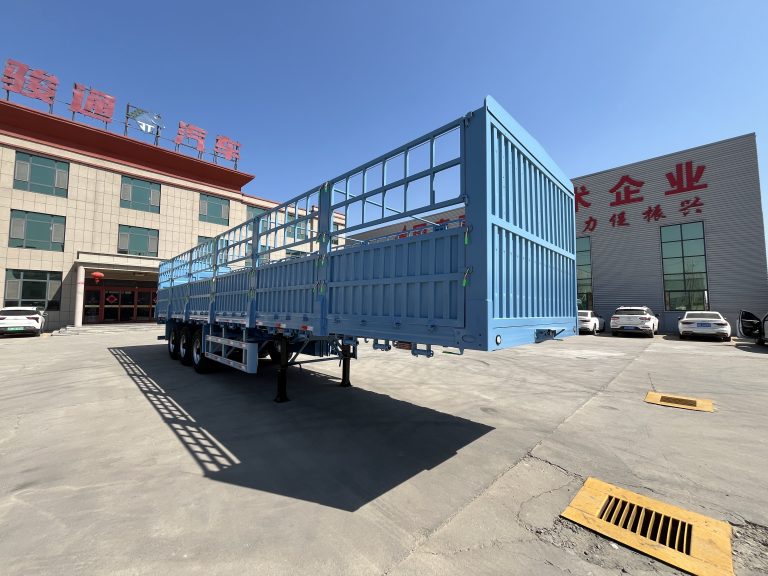
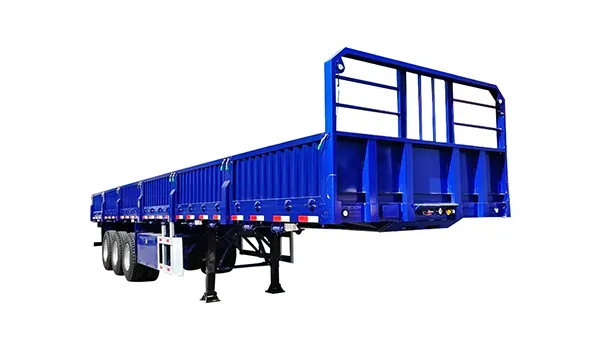
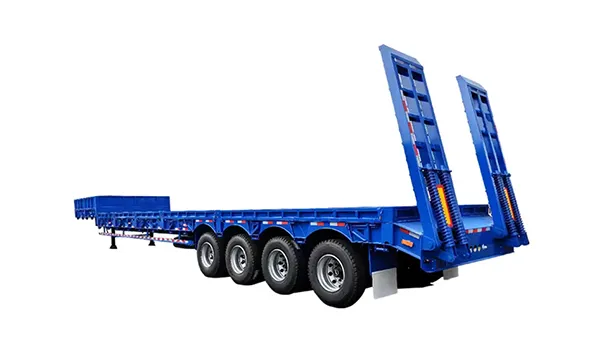
For mowers and landscape equipment, 6×12 may work for one compact mower, but 7×14 or larger may be better for multiple machines. Heavy equipment transport requires even more careful planning. In many cases, a lowbed trailer or flatbed semi trailer is more suitable than an enclosed cargo trailer.
Federal rules also matter for larger commercial operations. FHWA notes that the minimum allowable length limit for certain semitrailers on the National Network is 48 feet, while state grandfathered limits may also apply. This is why global logistics and construction buyers often move beyond small enclosed trailers and choose professional semi trailer solutions.
For heavy-duty transport, buyers should evaluate:
| نوع الحمولة |
Suitable Trailer Type |
| Small tools and supplies |
6×12 enclosed trailer |
| Contractor tools and mower |
7×14 enclosed trailer |
| Car or race car |
8.5×20 enclosed car trailer |
| Excavator or heavy equipment |
مقطورة ذات قاعدة منخفضة |
| Steel, timber, machinery |
نصف مقطورة مسطحة |
| Container cargo |
Skeleton trailer or container chassis |
| Fuel or liquid cargo |
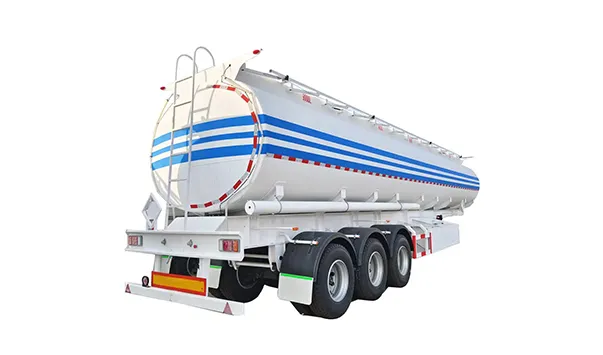
مقطورة صهريج |
| Sand, coal, gravel |
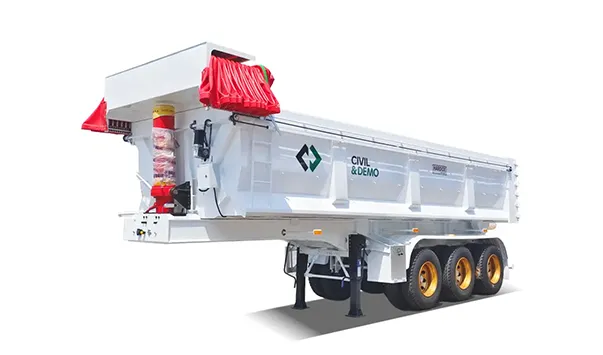
مقطورة التفريغ |
| مسحوق الأسمنت |
مقطورة لنقل الأسمنت السائب |

How Do Trailer Dimensions Affect Loading and Unloading?
Trailer dimensions affect more than cargo space. They affect loading speed, door choice, aisle space, balance, and safety. A trailer that is too narrow may make loading and unloading difficult. A trailer that is too low may not fit tall equipment. A trailer that is too long may be harder to reverse or park.
Important trailer dimensions include:
- الطول الإجمالي
- Interior length
- Trailer width
- Interior width
- Trailer height
- Interior height
- Rear door opening
- Ramp angle
- Floor height
- Tongue length
- Axle position
A ramp door is useful for wheeled cargo, mowers, motorcycles, and small machines. Barn doors may be better for dock loading or simple box cargo. For palletized cargo, rear opening width and interior height matter. For vehicles, floor strength and tie-down layout matter.
The right enclosed trailer should make work easier, not just provide space. A trailer provides value when workers can load faster, protect cargo better, and reduce damage during transport.
Should You Choose an Open or Enclosed Trailer?
Open and enclosed trailers serve different needs. An open trailer is easier to load from the side and often costs less. It is useful for construction materials, landscaping machines, steel items, and equipment that can handle weather exposure. An enclosed trailer protects cargo from rain, dust, theft, sunlight, and road debris.
Enclosed trailers offer better security and weather protection. They are often used for tools, commercial goods, motorcycles, event equipment, mobile workshops, and sensitive cargo. But they may weigh more, cost more, and create more wind resistance while towing.
| نوع المقطورة |
الأفضل لـ |
Main Trade-Off |
| Open utility trailer |
Simple equipment, materials, outdoor cargo |
Less weather protection |
| Enclosed cargo trailer |
Tools, goods, events, protected cargo |
More weight and cost |
| نصف مقطورة مسطحة |
Oversized or heavy cargo |
Needs load securing |
| مقطورة ذات قاعدة منخفضة |
Heavy machines and tall equipment |
More specialized use |
| مقطورة صهريج |
Liquid transport |
Product-specific design |
| مقطورة التفريغ |
Bulk loose material |
Hydraulic system required |
For global B2B buyers, open vs enclosed is a business decision. If cargo value is high or weather protection matters, enclosed is often worth the cost. If cargo is large, heavy, or irregular, open flatbed and lowbed solutions may be more practical.
How Should B2B Buyers Choose the Right Trailer Manufacturer?
B2B buyers should choose a trailer manufacturer based on engineering capability, welding quality, axle and brake configuration, payload design, material selection, export experience, and customization support. A low price may look attractive, but poor structure can lead to cracking, unstable towing, repair cost, or customer complaints.
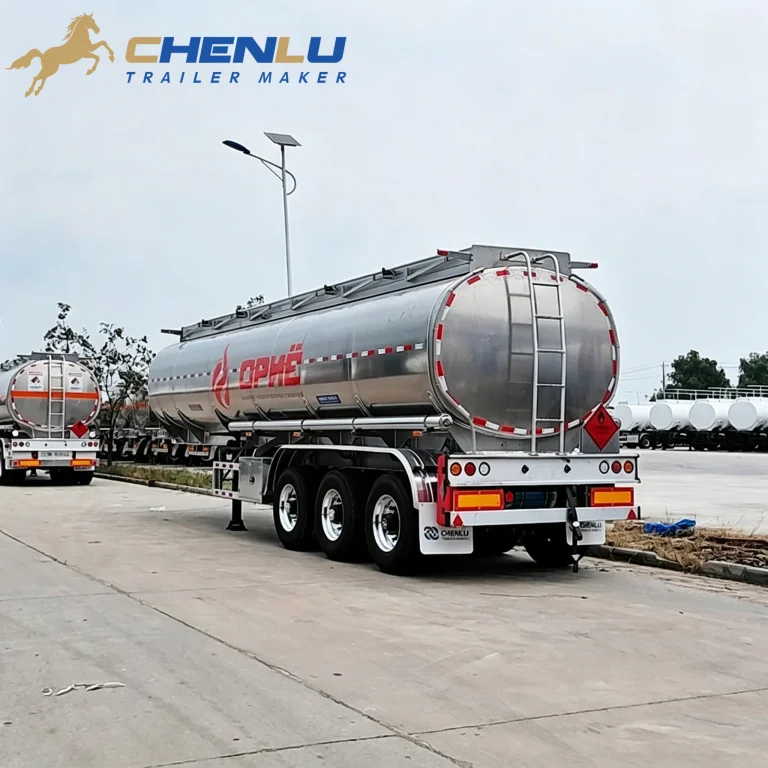
As a China-based semi trailer manufacturer, we provide flatbed semi trailers, مقطورات الهيكل العظمي, lowbed trailers, tanker trailers, dump trailers, container chassis, bulk cement trailers, and special transport vehicle solutions for global logistics, construction, mining, and bulk cargo transport customers.
Before confirming a trailer order, buyers should check:
| سؤال المشتري |
لماذا هذا مهم |
| ما هي البضائع التي ستنقلها المقطورة؟ |
Defines trailer size and structure |
| What is the maximum weight? |
Defines axle, suspension, brake, and frame design |
| ما هي ظروف الطرق التي سيواجهها؟ |
Affects suspension, tire, and chassis strength |
| Is weather protection needed? |
Decides open or enclosed design |
| Is loading from rear, side, or top required? |
Decides door, ramp, deck, or side wall layout |
| Is customization required? |
Important for mining, cement, fuel, and container transport |
| ما هي اللوائح المحلية المعمول بها؟ |
Impacts dimensions, lighting, brake system, and weight limits |
| How will the trailer be shipped? |
Affects packing, disassembly, and export planning |
A good manufacturer should help you choose a trailer based on real cargo, not just standard trailer size. That is especially important for importers, distributors, fleet owners, construction companies, mining operators, fuel transport providers, and heavy equipment contractors.
Practical B2B Case: Choosing a Trailer Size for Mixed Cargo Transport
A logistics customer needed to haul boxed goods, small machines, and occasional construction materials. At first, they asked for one enclosed trailer size for all work. After checking the cargo mix, we found that a single compact trailer would limit future transport tasks.
The decision process looked like this:
| Need |
Trailer Choice |
| Small boxed cargo |
Enclosed cargo trailer |
| Weather-sensitive goods |
Enclosed trailer with sealed body |
| Small machines |
Ramp door and stronger floor |
| Construction material |
Flatbed or open trailer option |
| Heavier machinery |
مقطورة ذات قاعدة منخفضة |
| نقل الحاويات |
Skeleton trailer or container chassis |
The final recommendation was not simply “buy the biggest trailer.” The better answer was to divide cargo by weight, volume, loading method, and protection requirement. This helped the customer avoid buying a trailer that looked right but did not fit real transport work.

Trailer Size Guide: Quick Selection Checklist
Use this checklist before you choose a trailer:
| Checkpoint |
What to Confirm |
| Cargo length |
Will the item fit inside the trailer? |
| عرض الحمولة |
Is the trailer wide enough for safe loading? |
| Cargo height |
Is there enough interior height? |
| وزن الحمولة |
Is payload capacity enough? |
| Tow vehicle |
Can the vehicle tow the loaded trailer? |
| Axle type |
Single axle or tandem axle? |
| نظام الفرامل |
Are trailer brakes needed? |
| Door style |
Ramp door, barn door, side door, or open deck? |
| حالة الطريق |
Smooth highway, construction site, mine road, or mixed road? |
| Future growth |
Will cargo size increase later? |
A trailer that’s too small creates daily problems. A larger trailer gives extra cargo room, but it also needs stronger towing capability, more parking space, and higher investment. The perfect trailer is the one that fits the job with a safe margin.
FAQs About Cargo Trailer Sizes
What is the most popular cargo trailer size?
For many light commercial and personal users, the 6×12 enclosed trailer is one of the most popular cargo trailer sizes because it offers useful space while staying easy to tow and maneuver.
Is a 6×12 trailer big enough?
A 6×12 trailer is big enough for many tools, boxes, small equipment, furniture, and light commercial cargo. It may not be enough for large machines, cars, heavy equipment, or high-volume cargo.
Should I choose a single axle or tandem axle trailer?
Choose a single axle trailer for lighter cargo, lower cost, and easier maneuvering. Choose a tandem axle trailer for heavier loads, better stability, and higher payload capacity.
What size enclosed trailer is best for contractors?
Many contractors choose 6×12, 7×14, or 8.5×16 enclosed trailers. The right size depends on tools, machines, shelving, ramp door needs, and payload capacity.
What trailer size is best for hauling a car?
A car hauler often needs an 8.5 feet wide enclosed trailer, commonly 8.5×20 or larger, depending on vehicle length, tie-down space, ramp angle, and extra tool storage.
What does trailer GVWR mean?
GVWR means gross vehicle weight rating. It is the maximum total weight the trailer is designed to carry, including the trailer’s own empty weight and cargo weight. Buyers should always compare GVWR, payload capacity, axle rating, and tow vehicle capacity.
Are enclosed trailers better than open trailers?
Enclosed trailers are better when cargo needs protection from weather, theft, dust, or road debris. Open trailers are often better for oversized items, easy side loading, outdoor equipment, and lower-cost transport.
النقاط الرئيسية
The 6×12 enclosed trailer is one of the most popular cargo trailer sizes for general hauling, small businesses, tools, moving, and light equipment.
A 6×12 trailer is popular because it balances space, cost, and towing ease.
Common trailer sizes include 5×8, 6×10, 6×12, 7×14, 7×16, 8.5×16, 8.5×20, and 8.5×24.
Single axle trailers are lighter and easier to maneuver; tandem axle trailers are better for heavier cargo.
Payload capacity matters more than trailer size alone.
GVWR, axle rating, brake system, tire rating, and tow vehicle capacity should be checked before purchase.
Contractors often choose 6×12, 7×14, or 8.5×16 trailers depending on tools and equipment.
Car haulers and race car users often need 8.5 feet wide enclosed trailers.
Heavy equipment, container cargo, fuel, cement, and mining transport usually require specialized semi trailer solutions.
The right trailer should match cargo type, loading method, road conditions, weight, regulations, and future business growth.



 18 مايو 2026