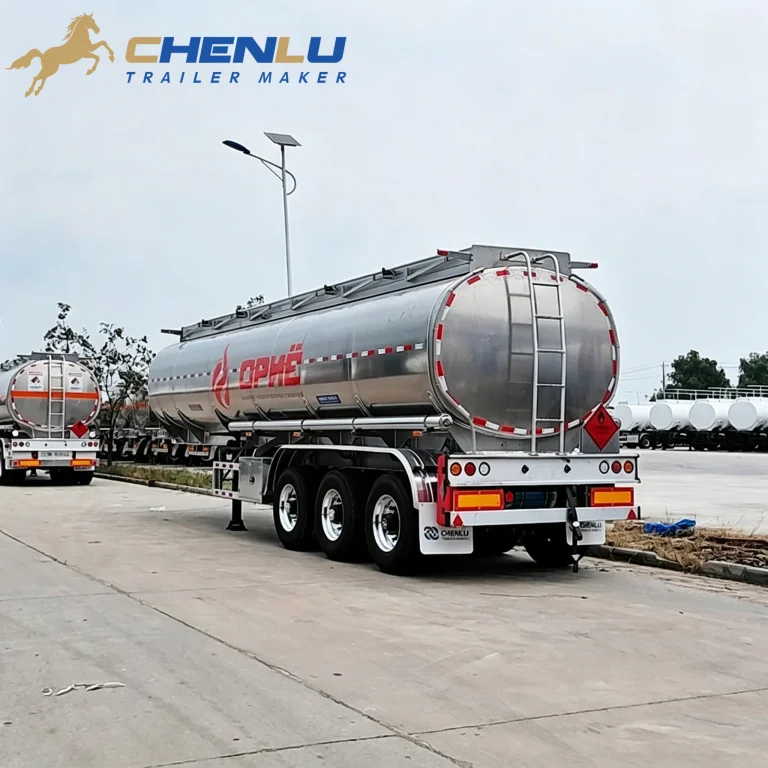
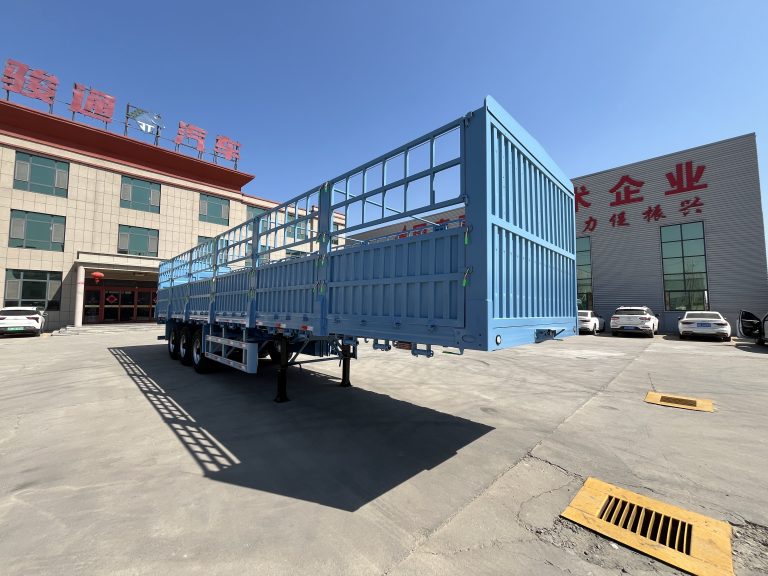
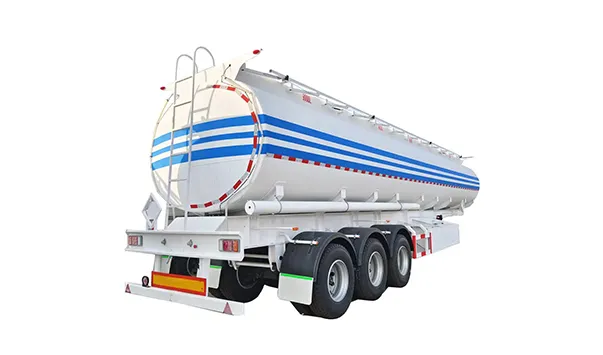
A tanker trailer is a semi-trailer designed to transport liquid, petroleum, chemicals, asphalt, or dry bulk products. The right tanker depends on cargo compatibility, tank material, gallon capacity, compartments, axle layout, suspension, discharge system, legal requirements, and route conditions. New and used tank trailers should always be evaluated by application, not appearance alone.
What Is a Tank Trailer, and What Can It Carry?
A tank trailer is a semi-trailer built around a tank or pressure vessel instead of a flat cargo deck. It connects to a tractor and carries products that flow, shift, discharge through valves, or require sealed containment.
Common cargo includes:
Gasoline,Diesel,Petroleum products,Crude oil,Compatible chemicals,Edible liquids,Asphalt,Cement,Fly ash,Lime,Other dry bulk powder
A liquid tanker and a pneumatic powder trailer may look similar from a distance, but they perform very different jobs.
A petroleum tanker trailer is designed around liquid movement, compartments, valves, venting, and discharge control.
A dry bulk tanker relies on pressure, air flow, cones, valves, and discharge piping.
CHENLU currently manufactures fuel tanker trailers, aluminum fuel tankers, and bulk cement tanker trailers for petroleum distribution, chemical transport, and powder logistics.

Which Tanker Type Is Right for Petroleum, Stainless, or Dry Bulk Cargo?
Different cargo needs different trailer structures.
| Tank Trailer Type |
Common Cargo |
Main Design Focus |
| Fuel Tanker |
Gasoline, diesel, petroleum |
Compartments, valves, surge control |
| Aluminum Tanker |
Fuel and compatible liquids |
Lower tare weight, corrosion resistance |
| Stainless Tanker |
Food-grade liquids or selected chemicals |
Cleanliness and corrosion compatibility |
| Carbon Steel Tanker |
Petroleum and industrial liquids |
Strength and cost control |
| Asphalt Tanker |
Hot asphalt |
Heat retention and insulation |
| Pneumatic Tanker |
الأسمنت، الجير، الرماد المتطاير |
Pressurized unloading |
| Vacuum Tanker |
Waste liquids and industrial materials |
Vacuum loading and discharge |
| Crude Oil Tanker |
Oilfield liquids |
Cargo compatibility and route durability |
A buyer searching tanker trailers for sale should therefore avoid treating every cylindrical trailer as interchangeable.
For example, a trailer used to haul diesel does not automatically suit a food product. A stainless vessel does not automatically suit every chemical. A cement pneumatic tank should never be evaluated with the same rules as a petroleum tank.
CHENLU’s current liquid and powder transport range separates fuel tanker, aluminum tanker, and cement bulker applications for exactly this reason.
Aluminum or Stainless: Which Tank Material Should You Choose?
Tank material affects trailer weight, corrosion behavior, maintenance, payload, and cargo compatibility.
الألومنيوم
و aluminum tanker is attractive when tare weight matters.
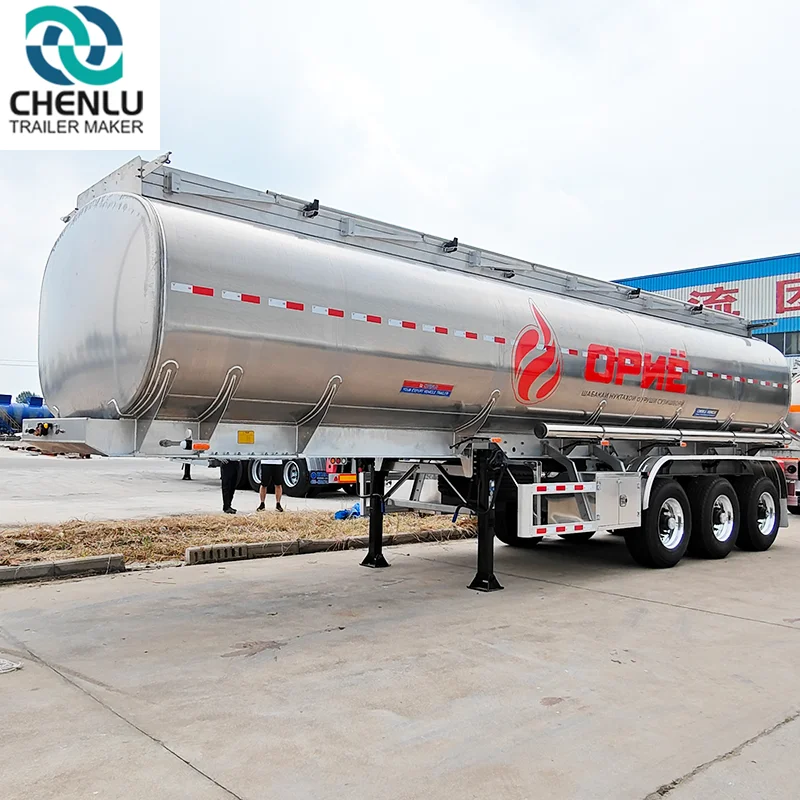
CHENLU currently publishes a 40,000 L aluminum tanker designed mainly for fuel, oil, petroleum, and other compatible liquids. Its published product positioning includes:
- Lightweight construction
- Multi-compartment layout
- مقاومة التآكل
- Optional insulation
- Optional vapor recovery
- Optional pump system
A lighter aluminum barrel can leave more legal vehicle weight available for cargo, depending on tractor weight and local gross-weight limits.
But aluminum is not automatically the best solution for every fleet.Repair methods, material cost, road conditions, and cargo compatibility still matter.
الفولاذ المقاوم للصدأ
A stainless steel tank is often considered when cleanliness or chemical compatibility becomes more important.
Applications can include:
- Food-related liquids
- Chemical products
- Sensitive industrial liquids
Buyers may see terms such as 304 SS in marketplace specifications, but the exact stainless grade must match the actual cargo.
Do not assume “stainless” means universal chemical resistance.
الفولاذ الكربوني
Carbon steel remains practical for many industrial and petroleum applications because it offers strength and cost efficiency.
The right material is not the most expensive one.
It is the material that matches:
cargo + route + legal payload + corrosion risk + cleaning requirement + maintenance capability.
How Should Gallon Capacity, Compartments, and Payload Be Selected?
Capacity is one of the first things buyers search.
You may see:5000 gal,6500 gal,7000 gal,7500 gal,8400 gal,40,000 L,50,000 L
But gallon capacity is only one part of tanker selection.
The same volume can create very different total weights depending on cargo density.
الوضع الحالي لشركة «تشينلو» fuel tanker guidance stresses that capacity should be selected from liquid density, trailer tare weight, compartment layout, legal payload, axle loading, and route limits—not volume alone.
A simple planning idea is:
Liquid mass = working volume × liquid density
Then compare that liquid mass with:
- الوزن الفارغ للمقطورة
- الوزن الفارغ للجرار
- Legal gross combination weight
- حدود المحور
A 40,000-liter tank carrying one petroleum product can create a very different axle load from the same tank carrying a denser liquid.

Why Compartments Matter
A multi-compartment tank allows a distributor to carry different products or delivery quantities in the same trip.
This can be useful for:
- Gasoline grades
- Gasoline + diesel
- Multi-station delivery
- طلبات العملاء المختلفة
Compartments can also help limit large-scale liquid movement.
But more compartments also add:
- Internal structure
- Valves
- Pipework
- Cleaning points
- الوزن
- التكلفة
Choose the number of compartments from delivery operations, not from the idea that “more is better.”
Why Do Axle and Suspension Configuration Matter?
A strong tank does not solve a poor running-gear design.
The axle layout must support the legal and dynamic load created by the cargo.
Factors include:
- عدد المحاور
- الحمولة المسموح بها للمحور
- تباعد المحاور
- Tractor axle layout
- الوزن الفارغ للمقطورة
- Cargo center of gravity
- Local road rules
A two-axle tanker, three-axle tanker, and multi-axle tanker may all serve different markets.
التعليق
تشمل الخيارات الشائعة ما يلي:
- نظام التعليق الميكانيكي
- Air ride suspension
Mechanical systems can suit rough roads and simple maintenance environments.
Air suspension may improve ride characteristics and load behavior for certain highway operations.
But neither option is automatically better everywhere.
A tanker used on rough mining roads in Africa faces a different operating environment from a petroleum tanker running paved interstate routes.
That is why we ask buyers about road conditions before finalizing the running gear.
The same rule applies to brakes.
A buyer may request drum brake or disc brake equipment depending on market, axle supplier, and regulations.
The final specification should be designed as one vehicle system.
How Do Pneumatic Dry Bulk Tank Trailers Work?
A pneumatic tank trailer carries powder instead of liquid.
تشمل البضائع النموذجية ما يلي:
- Bulk cement
- Fly ash
- Lime powder
- Selected industrial powder
Unlike a fuel tanker, the trailer uses compressed air to fluidize the product and push it through the discharge system.
A typical pneumatic system may include:
- ضاغط الهواء
- خطوط الطيران
- Aeration system
- Tank cones
- Discharge valves
- أنبوب التصريف
- Hose connection
The tank may be V-shaped or W-shaped depending on volume and discharge design.
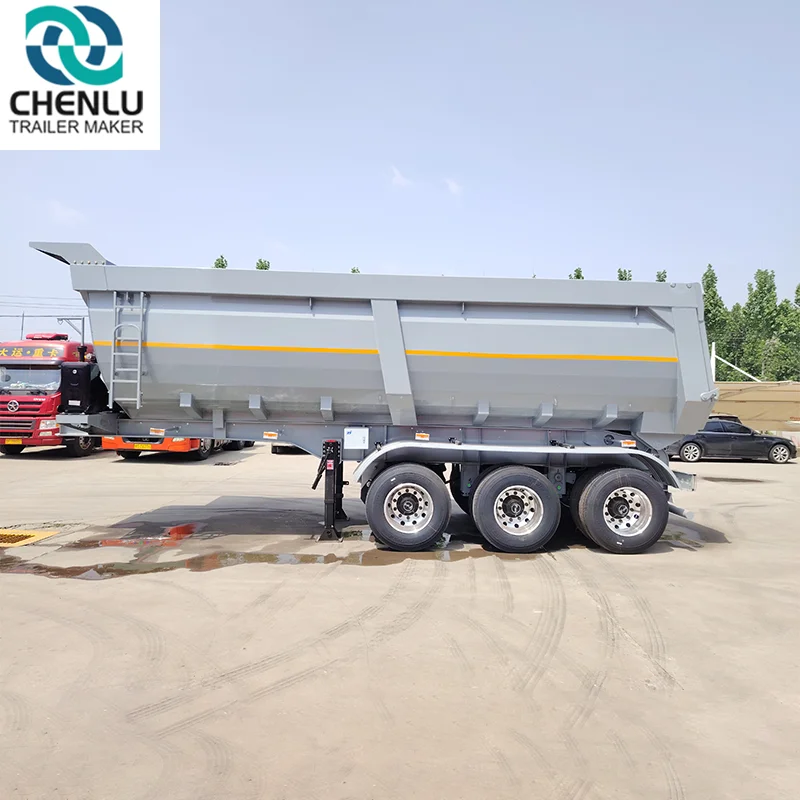
CHENLU currently publishes bulk cement and powder tanker solutions for cement, fly ash, lime, and related dry bulk cargo, with pneumatic discharge systems designed around material flow.
This is why a cu ft capacity figure often appears in North American dry-bulk listings, while liters or gallons are more common for liquid tankers.
Dry bulk capacity must be matched to:
- كثافة المادة
- سعة الخزان
- قدرة الضاغط
- Discharge distance
- Receiving silo
- Residual-material target
A bigger tank is not automatically a faster tanker.
Discharge design matters.
New or Used Tank Trailer: Which Gives Better Value?
A used tanker can make sense when:
- Purchase budget is limited
- The tank has a clear service history
- The cargo matches the original specification
- Repairs are minor
- Local parts are easy to source
A new tanker is more attractive when:
- Cargo is specialized
- Fleet standards are strict
- You need exact compartments
- Local road regulations require a special axle layout
- Branding matters
- You want a specific pump or valve package
- You need a long operating life from the first day
This is where factory customization becomes valuable.
Instead of adapting your operation to an old trailer, the trailer can be designed around your operation.
For international buyers, that can improve long-term fit even when the initial investment is higher.
Why Work With a Tanker Trailer Manufacturer Instead of Buying Only From a Listing?
A marketplace listing is useful for comparison.
A manufacturer is useful when your operation does not fit a standard listing.
Fleet owners and distributors often need different specifications because:
- Countries have different axle laws.
- Cargo density changes payload.
- Fuel distributors use different compartment layouts.
- Mining roads require tougher suspension.
- Powder operators need different compressors.
- Branding and dealer markets require OEM production.
CHENLU currently manufactures fuel tanker trailers, aluminum fuel tankers, bulk cement tankers, and other semi-trailer products for international logistics, construction, mining, and bulk transport customers.
Our preferred process is:
Cargo → capacity → material → compartments → discharge → axles → route → final specification
الأسئلة الشائعة
What is the difference between a tank trailer and a tanker trailer?
The terms are commonly used interchangeably. Both usually describe a semi-trailer with a tank body for carrying liquid, petroleum, powder, or other bulk cargo. The exact design depends on the material being transported.
What is the best tank material for gasoline and diesel?
Aluminum and carbon steel are both used in petroleum transport. Aluminum can reduce tare weight and resist corrosion, while carbon steel can offer strength and lower initial material cost. Final selection depends on payload, road conditions, maintenance, regulations, and budget.
Can one tanker carry gasoline and diesel?
A multi-compartment petroleum tanker can be configured to transport different compatible fuel products in separate compartments. The compartment, valve, piping, and operating system must be designed for the intended products.
Is an 8400 gallon tanker better than a 7000 gal tanker?
Not automatically. An 8400 gallon tanker carries more volume, but legal payload depends on liquid density, trailer tare weight, axle loading, and road limits. A 7000 gal tanker may be more appropriate for a route with lower legal weight or different delivery volume.
Are used tanker trailers a good investment?
They can be if the tank is structurally sound, compatible with the cargo, properly documented, and compliant with local requirements. Used tankers should be inspected for corrosion, weld repairs, valves, baffles, axles, suspension, brakes, and cargo history.



 14 September 2026