قد يؤدي اختيار الشريك غير المناسب إلى ضعف الهيكل، وتأخر التسليم، وتكاليف الإصلاح، وأداء غير آمن على الطرق. وبالنسبة لمالكي الأساطيل، وشركات الخدمات اللوجستية، ومشتري المشاريع، فإن الحل بسيط: العمل مع شركة تصنيع مقطورات تفهم متطلبات الحمولة والطرق والقوانين والتشغيل على المدى الطويل.
A reliable semi-trailer manufacturer should offer strong engineering design, durable steel or aluminum structure, stable quality control, OEM / ODM customization, and professional export support. The best choice is not always the cheapest supplier. It is the partner that can manufacture the right trailer for your cargo, road conditions, truck match, and business model.
مخطط المقال
- What do semi-trailer manufacturers really do?
- Why does trailer manufacturing quality matter for fleets?
- How do leading manufacturers design trailers for different applications?
- Which trailer types should global buyers compare?
- How should buyers evaluate steel, aluminum, composite, and panel structures?
- Why is customization important for logistics, construction, and mining?
- How do factory-direct suppliers support dealers and fleet buyers?
- Do you need a top 25 list, or a better buying checklist?
- Why choose a Chinese semi-trailer manufacturer for OEM / ODM projects?
- الأسئلة الشائعة
- النقاط الرئيسية
What Do Semi-Trailer Manufacturers Really Do?
Semi-trailer manufacturers do much more than build a frame with wheels. A professional supplier studies the cargo, the road, the truck, the legal load limit, the loading method, and the user’s daily operation. Then the team turns these needs into a safe and practical product.
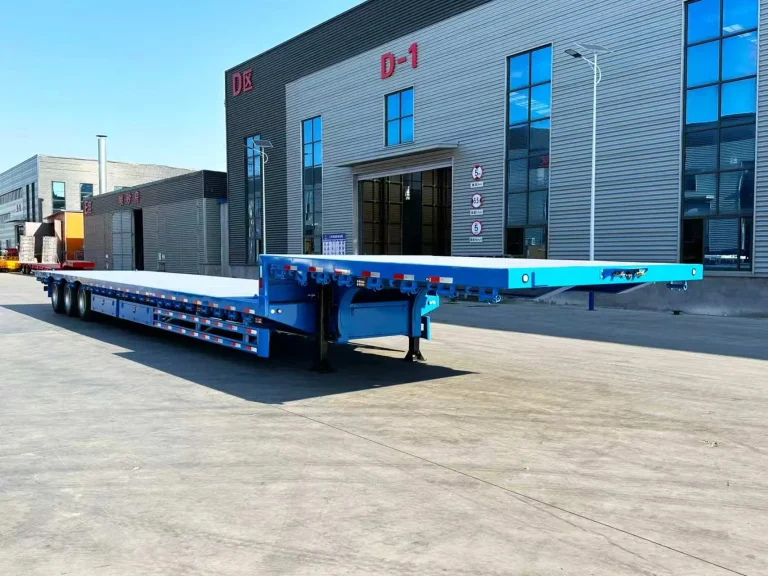
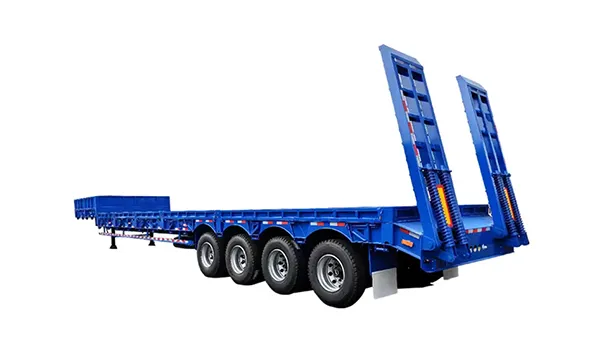
For example, a flatbed may need heavy-duty beams for steel coils or construction material. A lowbed may need a low working height for excavators. A skeleton unit must match container transport. A fuel tanker needs safe tank structure, compartments, valves, and welding control. Each design is different because each job is different.
بصفتي محترفًا semi-trailer manufacturer in China, we focus on the full process: design, manufacture, customization, export, and after-sales support. Our goal is not only to sell one unit. We help fleet owners, logistics companies, dealers, and project buyers build a stable transportation solution for long-term work.
Why Does Trailer Manufacturing Quality Matter for Fleet Operation?
Poor quality may look cheap on day one. Later, it becomes expensive. Weak welding, poor axle alignment, wrong steel thickness, thin paint, or low-grade parts can cause downtime, cargo damage, tire wear, and safety risks. For a fleet, every stopped unit means lost income.
Good trailer manufacturing improves daily operation in simple ways. The frame stays straight. The suspension works smoothly. The body resists cracks. The floor carries the right load. The paint protects the surface. The parts are easier to repair. Small details create big value over years of use.
إليكم مقارنة بسيطة:
| العامل |
Low-Cost Only Supplier |
Professional Manufacturer |
| هيكل الإطار |
Basic design |
Load-based engineering design |
| اللحام |
Inconsistent |
Controlled welding process |
| المادة |
Unclear grade |
Matched steel or aluminum |
| التخصيص |
محدودة |
خيارات OEM / ODM |
| Delivery |
Unstable |
Planned production and export |
| الدعم |
Hard to reach |
Long-term technical support |
For global buyers, the smart question is not, “What is the lowest price?” The better question is, “Which supplier can keep my fleet working safely and profitably?”
How Do Leading Manufacturers Design Trailers for Different Applications?
A good trailer starts with the application. Cargo transport, mining, construction machinery, fuel delivery, dry freight, port logistics, and bulk cement transport all need different structures. One model cannot fit every job.
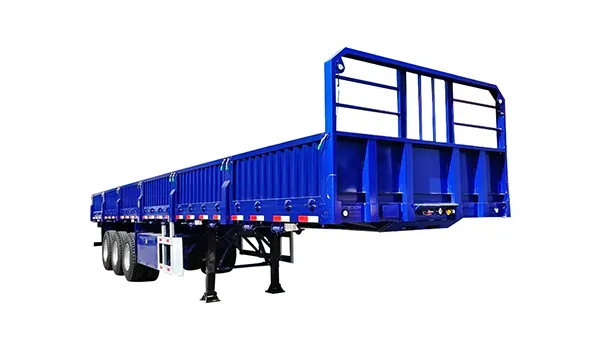
For container logistics, skeleton units should be light, strong, and easy to lock. For bulk cargo, sidewall or fence models need side height, floor strength, and easy loading. For heavy equipment, lowbed and drop decks must support concentrated loads and stable ramps. For liquid and powder transport, tank structure and safety parts matter most.
A professional team will ask clear questions before production:
- What cargo will you haul?
- What is the rated payload?
- What roads will the unit run on?
- What truck head will pull it?
- Do you need local regulation matching?
- Do you need spare parts, branding, or special paint?
- Will the unit work in port, desert, mine, city, or long-distance highway transport?
These questions help the manufacturer avoid wrong designs. They also help the buyer avoid future problems..
Which Trailer Types Should Global Buyers Compare?
Before choosing a supplier, buyers should compare the full range of trailers. A wide range matters because many fleets do not need only one product. A container transport company may also need flatbed units. A mining contractor may need dump units and lowboy units. A fuel company may need tankers and spare parts.
Common products include:
| Product Type |
الاستخدام الشائع |
Key Buyer Concern |
| منصة مسطحة |
Steel, pipe, container, construction cargo |
Load capacity and floor strength |
| Skeleton container unit |
Port and intermodal transport |
Twist lock layout and tare weight |
| Sidewall / fence unit |
Bulk cargo and agricultural goods |
Side height and loading flexibility |
| Lowbed / lowboy |
Excavator, crane, heavy machine |
Beam strength and loading angle |
| رقبة أوزة قابلة للفك |
Oversized machinery |
Easy front loading and stable structure |
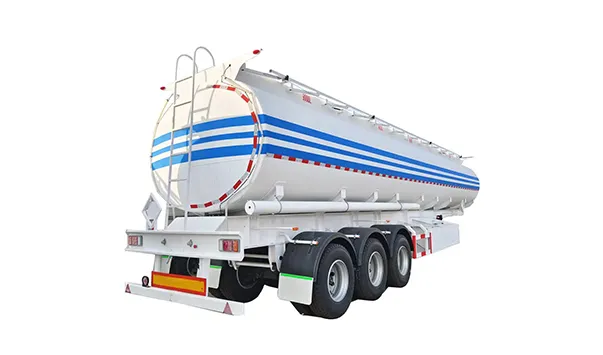
| ناقلة وقود |
Diesel, gasoline, oil transport |
Tank safety and welding quality |
| Aluminum tanker |
Liquid transport with lower tare weight |
Corrosion resistance and payload |
| ناقلة أسمنت سائبة |
Powder logistics |
Discharge speed and pressure system |
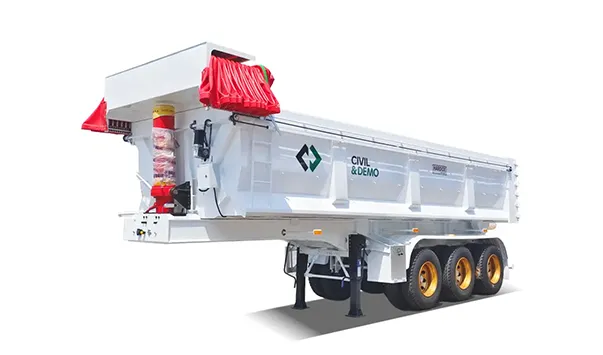
| Dump unit |
الرمل، الحصى، مواد التعدين |
Cylinder quality and body strength |
| سفينة نقل سيارات |
Vehicle transport |
Deck layout and loading safety |
This range of trailers helps buyers build one supply network instead of buying from many separate vendors.
How Should Buyers Evaluate Steel, Aluminum, Composite, and Panel Structures?
Material choice affects weight, strength, price, and service life. Steel is strong and widely used for heavy-duty work. Aluminum can reduce weight and improve corrosion resistance. Composite panel structures may support special van or cold-chain uses. Each material has a place.
For rough road work, all-steel structures are often preferred because they handle impact well. For fuel or chemical transport, aluminum may help reduce tare weight and improve payload. For some van or dry freight designs, smooth panel systems can improve appearance and cargo protection. A good supplier should explain why one material fits your job better than another.
Buyers should also check the details under the paint. Look at the beam size, floor plate, kingpin area, suspension support, landing gear support, welding line, and cross member layout. Pretty paint cannot save a weak structure. Strong design can.
Why Is Customization Important for Logistics, Construction, and Mining?
No two projects are exactly the same. A logistics company may need a light unit for long highway routes. A mining company may need stronger beams and thicker plates. A construction contractor may need ramps, toolboxes, spare tire carriers, or a special loading angle. A dealer may need private labeling and local market specifications.
That is why customization is more than a logo. It may include:
- Axle brand and quantity
- نوع التعليق
- Tire size
- قاعدة الهبوط
- نظام الفرامل
- Main beam thickness
- Floor plate thickness
- Side wall height
- Tank compartment design
- Paint color and brand logo
- صناديق الأدوات وحاملات الإطارات الاحتياطية
- Local road and regulation matching
Our factory can customize trailers for container logistics, bulk cargo transport, liquid and powder transport, machinery transport, mining, infrastructure, and energy projects. This flexibility helps global buyers reduce risk and improve fit.

How Do Factory-Direct Suppliers Support Dealers and Fleet Buyers?
A dealer needs stable supply, clear product information, and easy communication. A fleet buyer needs reliable delivery, spare parts, and engineering support. A project buyer needs drawings, technical confirmation, and export documents. Different buyers have different goals, but they all need trust.
Factory-direct supply can reduce extra trading layers. It can also make technical communication faster. When the buyer asks about beam size, axle load, tanker volume, loading height, or local road use, the answer should come from people who understand production.
A strong supplier can support:
- Trailer sales for dealers
- OEM branding for importers
- Drawing confirmation for project buyers
- Parts supply for long-term maintenance
- Aftermarket parts planning
- CKD or SKD options when needed
- Export loading and documentation
- Technical support for repair and daily use
A good parts dealer or truck equipment partner will also care about future service. The first order matters. The second and third orders prove the relationship.
Do You Need a Top 25 List, or a Better Buying Checklist?
Many buyers search for a top 25 list of manufacturers. Lists can help you learn the market, but they do not always tell you which supplier fits your route, cargo, budget, or country. A premier brand may be famous, but it may not be the right fit for a mining project in Africa or a container fleet in Southeast Asia.
A better method is to use a buying checklist. Ask whether the supplier can show drawings, explain material choices, support custom trailers, provide production photos, control welding, match your truck, and deliver spare parts. Ask about experience with your application. Ask how they handle road conditions.
Simple buyer checklist:
| Question |
لماذا هذا مهم |
| Can the supplier explain the structure? |
Shows engineering ability |
| Can they manufacture to your payload need? |
Reduces safety risk |
| Can they customize? |
Improves local market fit |
| Can they support export documents? |
Saves time |
| Can they provide parts support? |
Helps long-term use |
| Can they communicate clearly? |
Prevents costly mistakes |
A buying checklist is more useful than a ranking list because it focuses on your business.

Why Choose a Chinese Semi-Trailer Manufacturer for OEM / ODM Projects?
China has a strong trailer manufacturing industry with mature supply chains, skilled production teams, and competitive factory-direct pricing. For global buyers, this can mean flexible choices, fast communication, and strong value. But the key is choosing the right partner.
As a professional supplier, we specialize in OEM / ODM trailer solutions for logistics, construction, mining, port, fuel, powder, and industrial transport. We can support fleet owners, truck and trailer dealers, infrastructure contractors, heavy equipment rental companies, and international project buyers.
تشمل مزايانا ما يلي:
- Heavy-duty structure for demanding work
- Flexible OEM / ODM customization
- Stable production and export experience
- Product range covering many transport needs
- الدعم الهندسي قبل بدء الإنتاج
- Long-term cooperation mindset
- Competitive pricing from factory-direct supply
We are not only a supplier of products. We want to become a long-term solution partner for global transport businesses.
What Role Does Design Play in Safety and Cost Control?
Design decides how the product carries force. It affects the frame, axles, suspension, braking, loading height, turning radius, and daily usability. A small design mistake can create big problems later.
For example, a platform trailer manufacturer must think about concentrated loads, not only total payload. A heavy machine may place high pressure on a small area. A tanker must consider liquid movement. A dump unit must handle lifting force. A side curtain or side panel unit must balance access, protection, and weight.
Good engineering helps reduce tire wear, frame cracks, cargo damage, and road risk. It also makes the unit more versatile. A versatile product can handle more work, which helps the owner earn more from the same investment.
How Can Technology Help Modern Trailer Production?
Modern production is not only about cutting and welding. Technology can improve accuracy, repeatability, and inspection. CNC cutting, fixture welding, blasting, painting, pressure testing, and quality checks all support better production.
For tank products, testing is very important. For منصة مسطحة and lowbed products, beam control and welding quality are key. For dry van or truck trailers, wall and floor quality affect long-term use. For a utility trailer, the standard may be different, but the idea is the same: good production creates safer work.
Professional factories continue to innovate. Some markets care about aerodynamic parts, lightweight materials, and smart fleet operation. Others care more about rugged structure and easy repair. The best supplier does not push one answer. It helps the buyer choose the right answer.
Case Study: Choosing Trailers for a Mixed Logistics Fleet
Imagine a logistics company expanding into port container work, construction material delivery, and machinery transport. Buying only one product type would not work. The company needs a mixed plan.
A practical purchase plan may include:
| Business Need |
Suggested Product |
| نقل الحاويات |
Skeleton container unit |
| Steel and pipe cargo |
منصة مسطحة |
| Sand and gravel |
Dump unit |
| Excavator transport |
شاحنة ذات منصة منخفضة |
| Liquid fuel delivery |
ناقلة وقود |
| Powder transport |
ناقلة أسمنت سائبة |
This mix lets the buyer handle more contracts. It also reduces dependence on one cargo type. For dealers, a wide product line helps serve more local customers.
A manufacturer of innovative transport products should not only quote prices. It should help the buyer build a fleet plan. That is how real value is created.
الأسئلة الشائعة
ما المقصود بالمقطورة؟
A semi-trailer is a cargo-carrying unit without a front axle. It connects to a truck tractor through a fifth wheel. This structure is common in long-distance freight, port transport, construction, mining, and industrial logistics.
How do I choose a reliable trailer manufacturer?
Check engineering ability, material quality, welding control, customization options, export experience, delivery stability, and after-sales support. Also ask whether the supplier understands your cargo, local roads, and transport rules.
Is a utility trailer the same as a semi-trailer?
No. A utility trailer is usually smaller and used for lighter jobs. A semi-trailer is built for commercial transport and heavy fleet operation. The structure, braking system, load rating, and application are very different.
Should I choose steel or aluminum?
Choose steel for heavy-duty strength and rough road use. Choose aluminum when tare weight, corrosion resistance, or payload efficiency matters more. The best choice depends on cargo, route, climate, and budget.
Can I customize trailers for my market?
Yes. A professional supplier can customize axle layout, suspension, size, side wall height, tanker compartments, paint color, logo, toolboxes, and other features. Customization helps match local demand and road conditions.
Why buy from a Chinese trailer manufacturer?
A Chinese supplier can offer factory-direct pricing, flexible OEM / ODM service, broad product range, and export support. The best results come from working with a factory that understands engineering, quality control, and long-term cooperation.
أمور أساسية يجب تذكرها
- Choose a supplier based on structure, quality, and support, not price alone.
- Match the product to your cargo, road, truck, and local rules.
- Flatbed, lowbed, tanker, dump, skeleton, and car carrier products serve different jobs.
- Strong steel, proper aluminum use, and smart panel choices can improve service life.
- OEM / ODM customization helps dealers, fleets, and project buyers fit local markets.
- A reliable factory should support design, production, export, spare parts, and long-term cooperation.
- The best partner helps you build a safer, stronger, and more profitable fleet.



 22 يونيو 2026