فريق الهندسة في «تشينلو» | Heavy-Haul Trailer Engineering and Export Support | Updated August 19, 2026
Lowboy trailer dimensions must be built around the machine, loading method, tractor and route. Deck length and width are only the beginning. Loaded deck height, ramp angle, axle spacing, gooseneck geometry, ground clearance and the machine’s centre of gravity decide whether a lowboy can move an excavator or loader safely and legally.
Lowboy trailer dimensions should be checked with the machine loaded and the tractor connected.
Lowboy trailer dimensions at a glance
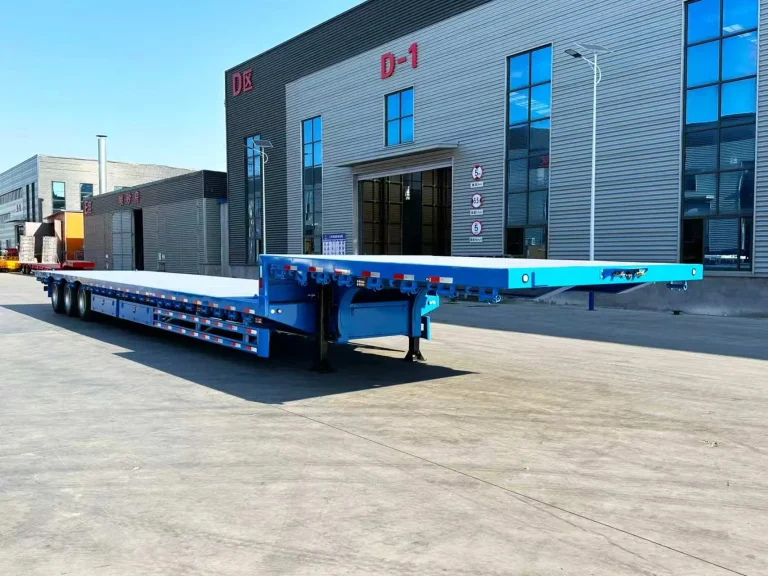
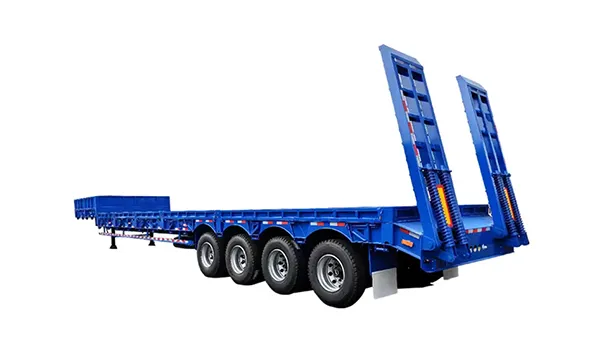
CHENLU publicly shows a three-axle lowbed semi trailer and an 80-ton lowbed model. Mechanical suspension and hydraulic loading-ladder options are mentioned for the lowbed range. A displayed removable gooseneck configuration is approximately 16,000 x 3,000 x 2,500 mm with an 80-ton rated load and a 12 kW diesel-powered hydraulic system. These are published configuration references, not a universal size for every machine or country.
البعد
What to measure on the machine
لماذا هذا مهم؟
طول سطح السفينة القابل للاستخدام
Track or wheel contact length, attachment overhang and loading direction
Confirms the machine fits without unsafe projections
عرض سطح السفينة
Overall machine width, mirrors, attachments and required side clearance
Controls stability, restraint access and route width
Loaded deck height
Deck height plus the machine’s highest fixed point
Determines bridge, cable and tunnel clearance
Ramp angle
Machine approach angle, ground clearance and breakover angle
Prevents belly contact during loading
تباعد المحاور
Machine centre of gravity and contact-point positions
Balances kingpin and axle-group loads
Rear overhang
Attachment length and allowable projection
Identifies permit, lighting and turning requirements
1. Start with the machine envelope
Record the machine’s transport weight, maximum length, width, height, track or tire contact length, ground clearance and centre of gravity. Measure with the boom, bucket, counterweight, outriggers or other attachment in the exact transport position.
Do not use the operating envelope if the machine folds or removes components for transport. The drawing should state whether dimensions include mirrors, exhaust equipment, folded booms and detachable attachments. A lowboy that fits the chassis may still fail when the bucket or counterweight is installed.
2. Choose usable deck length and width
Usable deck length is the clear support area, not the trailer’s complete length. Mark the gooseneck, rear structure, ramps, wheel covers and any space that cannot carry the machine. Width should include the machine’s widest fixed point plus the clearance needed for loading and tie-down work.
A wider deck can make loading easier, but it may increase route restrictions and require a permit. A longer deck can improve attachment placement while changing rear overhang and axle distribution. Compare the exact machine drawing with the lowbed drawing before approving production.
3. Check loaded height and ramp geometry
Lowboy selection is often driven by height. Add the selected deck height, suspension deflection, tire radius, machine height and any transport supports. Then compare the result with the destination route’s bridges, overhead lines, signs, tunnels and port equipment.
Loading ramps must suit the machine’s approach and breakover angles. Confirm ramp length, hinge position, hydraulic movement, deck transition and ground condition. A steep ramp can cause undercarriage contact even when the lowboy’s travel height appears acceptable.
4. Match the axle layout to the centre of gravity
CHENLU displays three-axle and heavier lowbed configurations. Axle count alone does not determine legal payload. The frame, suspension, brakes, tires, axle spacing, kingpin load and destination rules must be evaluated together.
Place the machine’s centre of gravity on the approval drawing. The factory can then calculate kingpin and axle-group loads for loaded travel, braking and ramp transitions. A machine that is within the rated gross load can still overload one axle group if it is positioned incorrectly.
5. Select the loading system
Mechanical ramps may suit repeatable loading with suitable site equipment. Hydraulic loading ladders or a folding/removable gooseneck can reduce the approach height for tracked machinery. CHENLU’s published lowbed range mentions hydraulic loading-ladder options, while removable gooseneck designs are intended for front loading near ground level.
Specify the hydraulic power source, control position, ramp width, locking method and emergency support. If a displayed configuration uses a 12 kW diesel-powered hydraulic system, confirm that the selected project requires the same system and that the destination accepts its equipment and fuel arrangement.
6. Review tractor and route compatibility
Provide the tractor model, fifth-wheel height, fifth-wheel position, rear-axle arrangement, wheelbase and available clearance. Gooseneck geometry affects turning, coupling height and the distribution of weight between the tractor and trailer.
Check total combination length, loaded height, width, axle loads, gross combination mass and projections against the destination route. Oversize machinery may require permits, escorts and a route survey. The المنتدى العالمي للجنة الأمم المتحدة الاقتصادية لأوروبا (UNECE) لتنسيق لوائح المركبات describes the WP.29 framework; the exact approval route depends on the market and vehicle configuration.
7. Confirm securing and operating conditions
Ask the supplier to show lashing points, chains or binders, wheel stops, deck reinforcement and the approved restraint method. The restraint plan should suit the machine’s frame and attachment points rather than rely on generic tie-down locations.
Ground condition matters during both loading and travel. Soft shoulders, cross-slope, uneven ramp support or a concentrated machine load can change stability. The operator should follow the equipment and trailer manufacturer’s loading instructions; a dimension table cannot replace a site risk assessment.
Benefits and limits of custom lowboy dimensions
A project-specific lowboy can reduce unused deck space, improve machine clearance and align the loading method with the fleet’s equipment. It can also coordinate axle layout, suspension, ramps, gooseneck style and restraint points around one defined machine family.
Customization has tradeoffs. A very low deck may reduce ground clearance. A longer deck can increase turning space and permit needs. Hydraulic equipment adds complexity and maintenance. A multi-axle design can distribute load while increasing tire, brake and maneuvering requirements.
Lowboy trailer price and quotation inputs
Selected standard lowbed trailer configurations are publicly listed at approximately USD 11,000 to USD 11,500. Removable gooseneck configurations are listed around USD 19,000, while selected folding gooseneck or multi-axle heavy-haul configurations are around USD 38,000. These are reference prices for selected configurations, not fixed offers.
Send the machine drawing, transport weight, destination, route constraints, tractor details, loading method and preferred axle arrangement with the quotation request. The final price depends on dimensions, rated load, steel, suspension, tires, brakes, hydraulic equipment, accessories, order quantity and shipping terms.
Lowboy trailer dimensions FAQ
What are standard lowboy trailer dimensions?
There is no single global standard. Lowboy trailer dimensions depend on machine size, deck height, loading system, axle layout, tractor and destination rules. Request a project drawing for the exact combination.
How wide should a lowboy trailer be?
The deck should support the machine’s maximum width with enough room for safe loading and restraint access while staying within the route’s normal legal width where possible. Wider loads may require permits and escorts.
Is an 80-ton lowboy suitable for every excavator?
No. Rated load is only one check. The machine’s centre of gravity, contact points, height, width, attachment and axle distribution must match the selected frame and route.
When is a removable gooseneck useful?
A removable gooseneck can allow heavy machinery to load from the front near ground level. Confirm the approach angle, hydraulic system, coupling geometry and machine clearance before choosing it.
What information is needed for a lowboy quote?
Provide machine weight and dimensions, attachments, centre of gravity, loading method, tractor data, destination, route limits, preferred axle layout and required restraints. CHENLU can then prepare an application-specific lowboy configuration.
Request a heavy-haul drawing
Prepare the machine envelope and route information before requesting a final quote. اتصل بشركة CHENLU Trailer to review the required lowboy trailer dimensions, loading system and axle configuration.



 19 أغسطس 2026