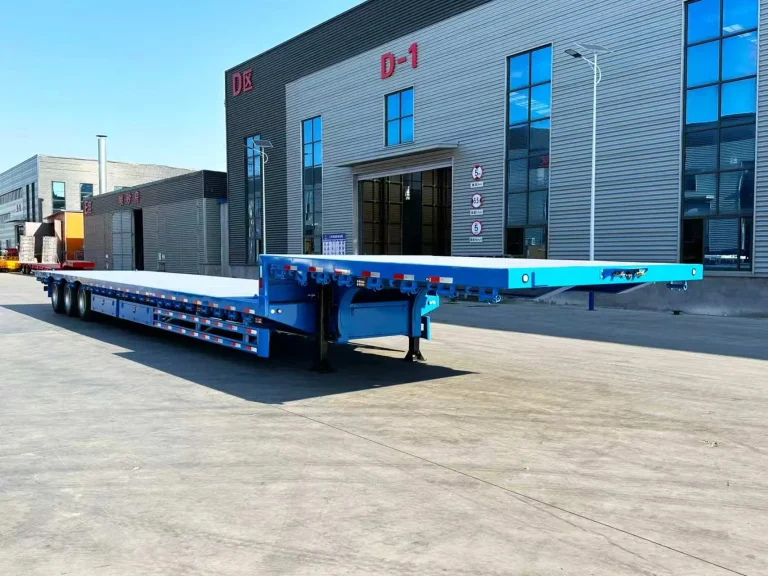
يمكن أن يكلفك شراء المقطورة المسطحة الخاطئة تكلفة مضاعفة. أولاً عند الشراء. ثم مرة أخرى من خلال مشاكل الحمولة الزائدة، وصعوبة التحميل والتفريغ، وضعف التثبيت، وسوء إعادة البيع. الحل الأفضل بسيط: طابق المقطورة مع حمولتك الحقيقية وشاحنتك وعملك اليومي.
When buying a flatbed trailer, focus on five things first: the cargo you plan to haul, true load capacity, compatibility with your tow vehicle, deck design, and securement features. The best flatbed trailer is not just the cheapest model. It is the one that safely fits your loads, your routes, and your long-term operating costs.

المخطط العام
Why do so many businesses still need a flatbed trailer?
What cargo do you plan to haul, and why does that matter first?
How do load capacity, GVWR, and axle ratings affect your choice?
Can your truck or tow vehicle handle the trailer safely?
What are the common types of flatbed trailers?
Should you choose steel trailers or an aluminum trailer?
How important is easy loading and unloading?
What securement features should you look for on a flatbed trailer?
What running gear and structural details matter most?
How do support, resale value, and supplier quality affect the final decision?
بصفتنا شركة مقرها الصين الشركة المصنعة لشبه المقطورة, we work with logistics operators, construction companies, mining contractors, heavy equipment transport buyers, and trailer distributors who need equipment that performs in the real world. In our experience, flatbed trailers are the workhorses of the trucking industry because they are open, flexible, and optimized for accessibility when loading many different kinds of freight. FMCSA’s securement guidance also reflects that open-deck trailers require careful load control because the cargo is exposed and must be secured properly for public-road transport.
Why do so many businesses still need a flatbed trailer?
A مقطورة مسطحة stays popular because it solves a simple problem: some loads do not fit well inside vans or enclosed trailers. If you need to move oversized pallets, pipes, machinery, steel, timber, or construction materials, a flat deck gives better access from the side, rear, and top. That open layout is exactly why flatbeds remain a standard choice across construction, industrial logistics, agriculture, and project cargo work.
Another reason is speed. Because flatbeds don’t have side walls or a fixed roof, forklifts and cranes can place freight directly onto the trailer from multiple directions. That improves the loading process and can reduce handling limits for awkward or long freight. For many buyers, that mix of flexibility and accessibility is the main reason they need a flatbed instead of a closed trailer.
If your business depends on variable freight, the perfect trailer for your needs is often not the most specialized one. It is the one that can adapt to changing jobs without creating loading headaches.
What cargo do you plan to haul, and why does that matter first?
Before you compare brands, specs, or price, define the type of cargo you actually move. That single step influences almost everything else: deck length, deck material, securement layout, axle count, suspension, and whether you need a standard deck, a step deck, or a more specialized semi-trailer. Felling’s custom-trailer guidance says buyers should describe what they are hauling, the load dimensions and weight, how the trailer will be used, and any must-have features.
The cargo you plan to haul also determines whether you need extra width, lower deck height, stronger side structure, or more tie-down flexibility. Hauling construction materials is different from moving pipes, heavy machinery, or palletized loads. If your freight changes week to week, choose a flatbed trailer for your needs that stays versatile instead of overly narrow in purpose.
This is where many buyers go wrong. They shop by headline price first. A smarter buying guide starts with cargo profile, because the wrong deck style will keep costing you long after delivery.
How do load capacity, GVWR, and axle ratings affect your choice?
This is one of the most important steps in choosing the right flatbed trailer. You need to compare your real freight weight against the trailer’s load capacity, GVWR, and axle ratings. Felling’s owner’s manual warns not to exceed the trailer Gross Vehicle Weight Rating or axle Gross Axle Weight Rating, and it stresses that safe loading requires considering overall load weight, load distribution, and the ratings of tires, wheels, and axles.
A buyer should not ask only, “Can this flatbed trailer carry the load?” The better question is, “Can it carry the load repeatedly without overstressing the frame, axles, tires, and securement points?” FMCSA’s cargo rules also require that all structures and components used for cargo securement be in proper working order and not be damaged or weakened.
If you regularly move heavy loads, build in margin. That gives you better safety, less strain on components, and often a better life cycle cost than running a lighter trailer at its limit every day.
Quick Capacity Checklist
| What to check |
لماذا هذا مهم؟ |
| الوزن الإجمالي المسموح به للمركبة (GVWR) |
Total safe loaded weight limit |
| الحمولة المسموح بها للمحور |
Prevents overloading one axle group |
| Tire and wheel ratings |
Must support real loaded condition |
| Deck structure |
Needs to match load concentration, not just gross weight |
| Load distribution |
Affects sway, braking, and component life |
Felling also notes that for tandem and triple-axle trailers, front-to-rear distribution must not overload any axle, and heavy items should be kept low and over the axles where possible.
Can your truck or tow vehicle handle the trailer safely?
A good flatbed trailer is only half the system. The tow vehicle matters just as much. Felling’s manual states that capacity is the total towing weight, that positive tongue load is necessary, and that the ball, coupler, or gooseneck hardware on the tow vehicle must meet or exceed the trailer’s ratings. It also warns that wrong hitch height or poor loading can cause sway or overload the rear axle of the towing vehicle.
So when matching trailer and truck, do not look only at brochure language. Check the vehicle’s towing rating, hitch rating, electrical compatibility, brake controller needs, and the actual loaded condition. The manual also says you should inspect the trailer after coupling and before roadway operation.
This is especially important for bumper-pull and gooseneck units. If you ignore the vehicle’s towing limit, a trailer that looked like a bargain can become unsafe fast.

What are the common types of flatbed trailers?
There are several common types of flatbeds, and the right one depends on load height, equipment, and access requirements. Standard deck flatbeds are the most general-purpose option. They suit a wide range of palletized or oversized freight and are often the easiest place to start when you want a flexible trailer for your needs.
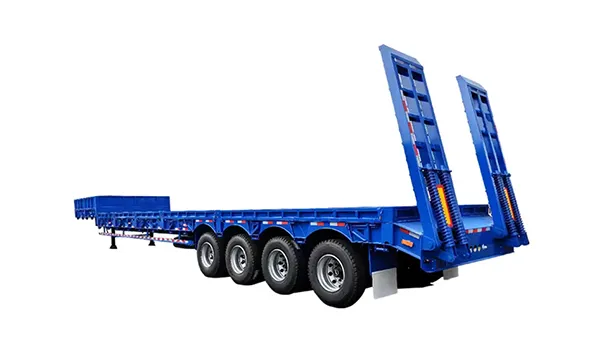
Then there are step deck trailers. These are similar to standard flatbeds, but they have a lower deck section that sits closer to the ground. Great Dane says its drop-deck option offers lower deck heights for tall or heavy-duty hauling, while Felling’s over-the-road step deck line lists loaded deck heights around 35 inches or 41 inches depending on model. That lower section helps operators carry taller freight without exceeding height limits on the road.
If you move heavy equipment, a step deck or other low-height design may make more sense than a standard deck. The right answer depends on what you need to load, how often you need ramps for easy loading, and whether height restrictions affect your routes.

Should you choose steel trailers or an aluminum trailer?
The construction material of a flatbed affects weight, durability, corrosion resistance, and repair style. A steel platform usually gives a strong, familiar structure and often cost less up front. Great Dane’s all-steel Freedom model emphasizes a high-strength steel frame for durability, while its combo model uses steel and aluminum together for strength plus weight savings.
An aluminum trailer or aluminum-deck combination can reduce tare weight. Great Dane’s product page says buyers can choose all-steel, combo, or all-aluminum flatbed models to match application needs, and one customer quote highlights lighter construction as a way to cut operating cost. In simple terms, aluminum trailers are lighter, which may help if payload efficiency matters more than lowest purchase price.
So when comparing the material of a flatbed trailer, think beyond price. Ask about maintenance conditions, expected corrosion exposure, repair environment, and resale expectations. The best answer depends on your lanes and your cargo, not on one material being perfect for everyone.
How important is easy loading and unloading?
It matters a lot. The whole reason many operators choose flatbeds is the ease of loading and unloading. But not all open decks are equally convenient. Felling’s owner’s manual says that before loading, operators should inspect the floor and tie-down system, park on firm level ground, and align ramps with equipment tires or tracks where needed. It also describes stabilizing the rear during loading and then securing the load before transport.
If you regularly move forklifts, scissor lifts, rollers, or similar gear, the deck height and access angle matter. Felling’s hydraulic-tail and step-deck products explicitly position lower decks and loading features as solutions for easier movement of low-clearance machines. That is why makes loading easier is not a small detail. It directly affects cycle time, job-site safety, and the kinds of equipment you can move efficiently.
When you find the perfect flatbed, you are not just buying deck space. You are buying workflow. Better easy loading and unloading can save labor and reduce damage over the life of the trailer.
What securement features should you look for on a flatbed trailer?
Securement hardware is one of the biggest decision points when you buying a flatbed trailer. FMCSA says cargo securement systems must prevent cargo from leaking, spilling, blowing, or falling, and the tiedowns must be attached in a way that prevents them from becoming loose or releasing during transit. FMCSA also says edge protection should be used whenever tiedowns could be cut or abraded by the cargo.
That means you should look for trailers with strong, usable anchor features: rub rails, stake pockets, pipe spools, and well-placed tie-down points. Great Dane specifically highlights heavy-duty side rails, stake pockets, rub rails, and load-securement options, while Felling’s step deck line includes rub rail, stake pockets, and double pipe spools as standard features to make securement easier.
Good securement hardware helps you secure your load, but it also helps you work faster and more consistently. For the buyer, that means less improvisation and a safer deck when handling different freight profiles.
What running gear and structural details matter most?
A smart trailer buying guide should go below deck level. Look closely at the running gear: axle flatbed configuration, suspension type, brake package, crossmember spacing, main beam design, and overall frame strength. Felling’s over-the-road step deck specs mention engineered fabricated main beams, structural side rails, closely spaced crossmembers, and oil-bath axles with air-ride suspension.
On the structural side, deck support and beam layout matter because flatbeds handle point loads, forklifts, uneven loading, and frequent side access. Great Dane emphasizes suspension packages, floor options, bulkheads, coil packages, rear-end options, and rust-resistant coupler details, which is a good reminder that the best flatbed is a full configuration, not just a deck length.
If your work includes rough sites, heavy machines, or mixed freight, do not underbuy the structure. Stronger frame logic often costs more up front, but it usually helps buyers make an informed decision for long-term use.
How do support, resale value, and supplier quality affect the final decision?
A trailer is not just a product. It is a long-use asset. That is why support matters: spare parts, after-sales response, export packaging, technical drawings, and the supplier’s ability to customize the flatbed trailer for your needs. Buyers should ask whether the manufacturer offers a wide selection of high-quality trailers, optional configurations, and real support after delivery. Great Dane promotes tailored solutions and also highlights resale strength in its Freedom line.
Resale value matters because fleet plans change. A better-known or better-built trailer may cost more, but it can hold stronger resale value later. That can make the real lifetime cost better than a cheaper unit with weak market demand.
So when choosing the right, think beyond the factory gate. The perfect trailer is the one that suits your daily operation now and still protects your business later through serviceability, support, and retained value.
الأسئلة الشائعة
What should I check first when buying a flatbed trailer?
Start with the cargo you plan to haul. Weight, dimensions, loading method, and route restrictions should guide the whole decision. After that, compare GVWR, axle ratings, securement hardware, and towing compatibility.
Is a step deck better than a standard flatbed trailer?
A step deck is better when taller cargo must stay under legal height limits or when you want a deck section that sits lower for easier loading of certain equipment. A standard flatbed trailer is usually the more flexible all-around choice for general freight.
Should I buy steel trailers or an aluminum trailer?
It depends on priorities. Steel trailers usually emphasize strength and lower initial price, while an aluminum trailer or aluminum-heavy design can reduce tare weight and help payload efficiency. The better option depends on freight type, operating environment, and maintenance goals.
How do I know if my tow vehicle is strong enough?
Check the trailer’s loaded weight against the tow vehicle and hitch ratings. Felling’s manual says the coupler and gooseneck hardware on the towing vehicle must meet or exceed trailer ratings, and it warns that poor weight distribution or wrong hitch setup can cause sway or overload the rear axle.
What securement features matter most on a flatbed trailer?
Look for rub rails, stake pockets, side rails where appropriate, and strong tie-down points. FMCSA requires cargo securement systems and tiedowns to prevent the load from coming loose in transit, and Great Dane/Felling both emphasize securement options as a key part of open-deck trailer design.
Is a flatbed trailer better than enclosed trailers?
For oversized, awkward, crane-loaded, or side-loaded freight, yes. Enclosed trailers are better when you need to protect cargo from weather or theft. Flatbeds win on access and versatility; enclosed units win on coverage.
أمور أساسية يجب تذكرها
Start with the freight, not the brochure. The type of cargo should shape the whole purchase.
Match GVWR, axle ratings, and deck structure to real operating weight, not ideal conditions.
Make sure your truck or tow vehicle can safely handle the loaded trailer and hitch setup.
If height matters, step deck trailers may be the smarter choice because the lower deck helps with taller freight.
Compare steel and aluminum based on tare weight, durability, and corrosion exposure, not just invoice price.
Good securement hardware is not optional. It is part of safe and legal operation.
Easy loading access saves labor, reduces damage risk, and improves real-world productivity.
Supplier quality, after-sales support, and resale value matter almost as much as the trailer itself.



 09 مايو 2026